
This thai red curry with chicken is the recipe I make when I want something that tastes like takeout but comes together in 30 minutes on a weeknight. The sauce gets built separately before the chicken and vegetables go in, which gives you a richer, more developed flavor than a one-pot version where everything cooks together and nothing really gets a chance to bloom.
Creamy coconut milk, fresh garlic and ginger, red curry paste, and Thai basil. Easy to make gluten free with one simple swap.
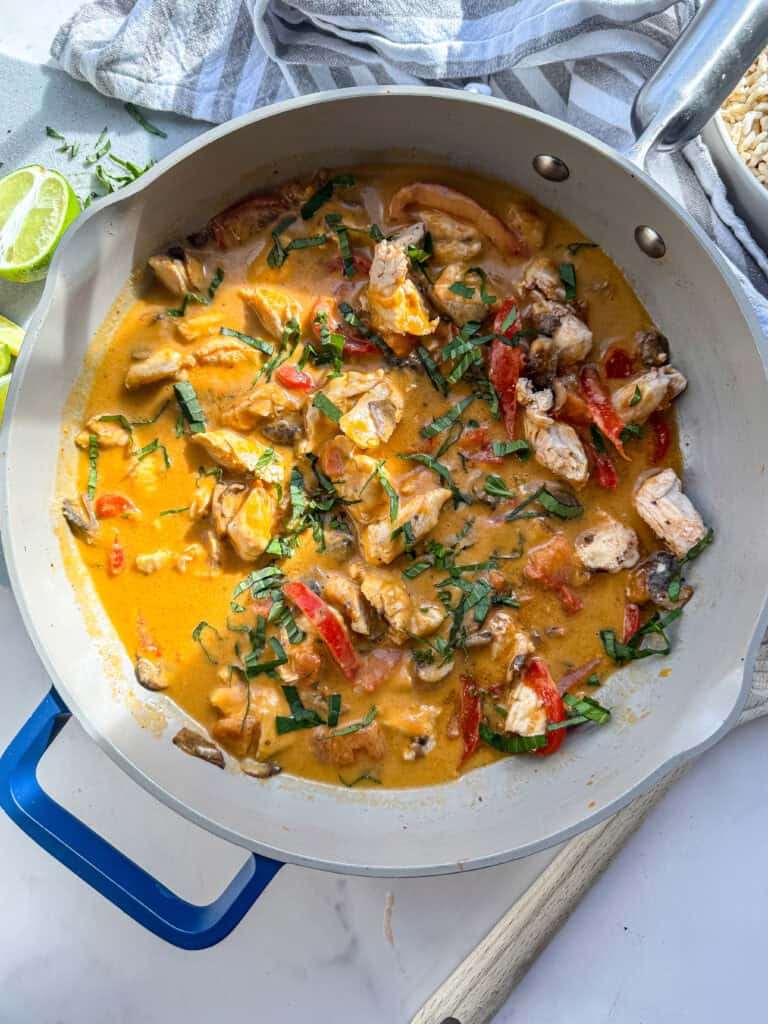
Why You’ll Love This Thai Red Curry with Chicken Recipe
- Building the sauce separately is what makes this different. Blooming the curry paste in oil with fresh garlic and ginger before the coconut milk goes in creates a depth of flavor that cooking everything together in one pot just cannot replicate.
- Store-bought red curry paste does all the heavy lifting. You get restaurant-quality flavor without making anything from scratch.
- Fresh garlic and ginger go in before the paste. This is the step most recipes skip and it is what makes the sauce taste complex instead of flat.
- Thai basil stirred in at the very end keeps the whole dish bright and fresh instead of heavy.
- Adjustable heat. Two tablespoons of curry paste for mild, three for more kick. Taste as you go.
- Done in 30 minutes with minimal cleanup.
- Easy to make gluten free with coconut aminos, liquid aminos, or gluten free soy sauce instead of regular soy sauce.
- If you love easy Asian-inspired dinners like this one, you will also love my coconut curry rice and my gluten free Singapore chicken curry.
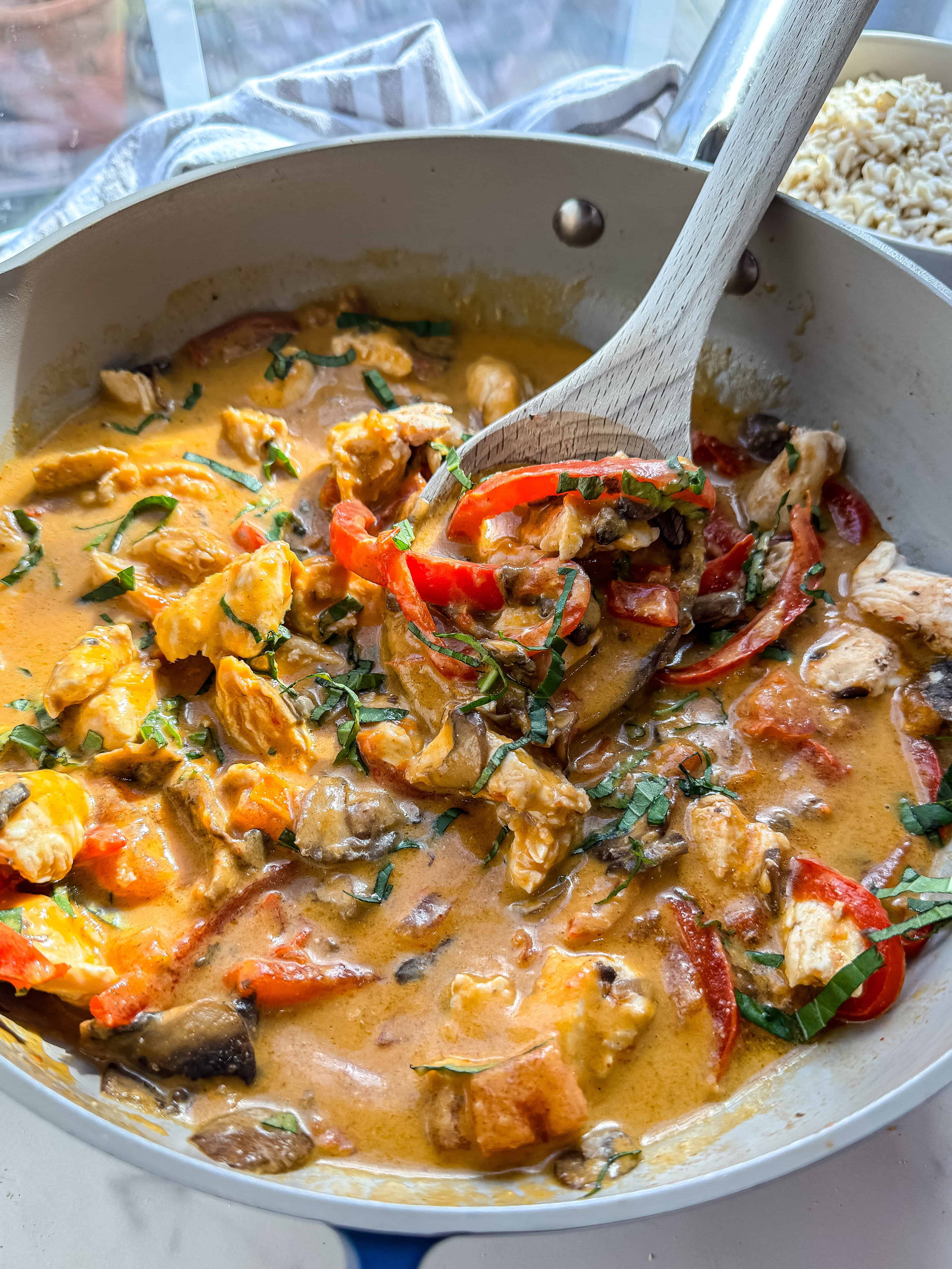
What Makes This Thai Red Curry Different
Most thai red curry recipes cook everything together in one pot. This one does not and that is the difference you will taste.
Building the sauce in a separate saucepan lets the curry paste bloom in hot oil with the garlic and ginger before the coconut milk goes in. That blooming step is what releases the full flavor of the paste instead of just dissolving it into liquid.
Cooking the chicken separately until browned first adds another layer of flavor you lose when you poach it directly in the sauce. And sautéing the vegetables separately keeps them tender-crisp instead of soft and waterlogged by the time everything is done.
When it all comes together at the end, every component is cooked exactly right.
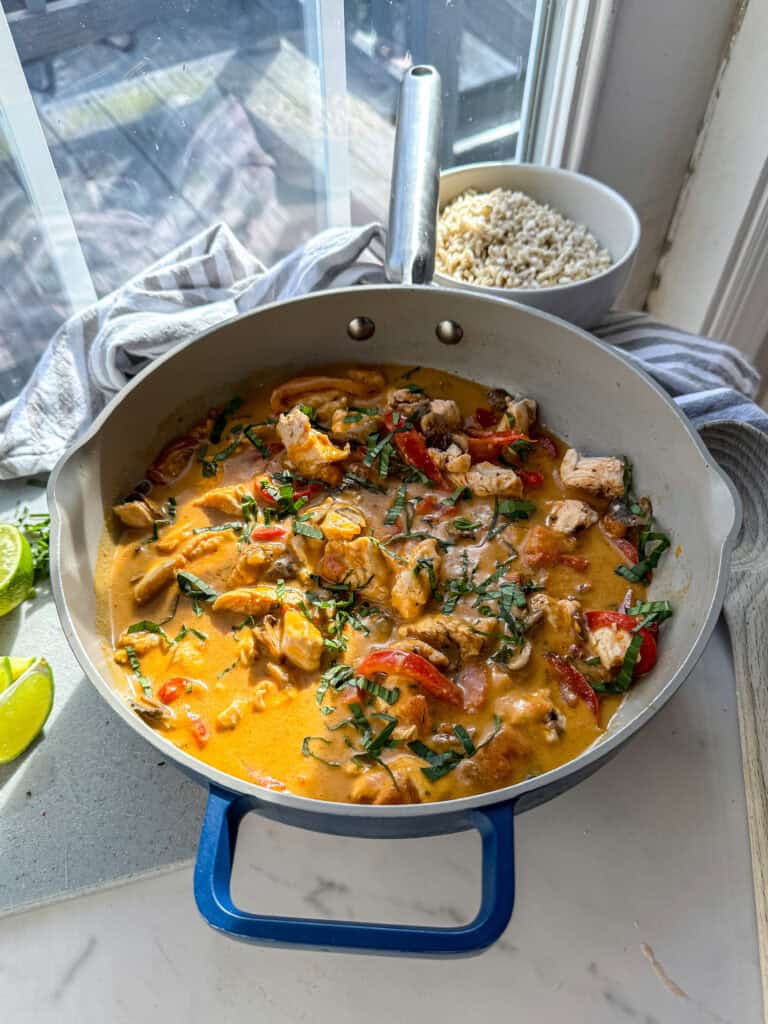
Ingredients & Substitutions
For the sauce:
- Red curry paste: The backbone of the whole dish. Mae Ploy and Maesri are the two brands I recommend most. Both are far better than generic grocery store brands and are widely available. Start with 2 tablespoons for mild heat and add a third if you want more kick.
- Coconut milk: Full fat only. Light coconut milk makes a thinner, less creamy sauce and you will notice the difference immediately.
- Fresh garlic and ginger: Both go into the pan before the curry paste and build the flavor base. Do not substitute garlic powder or ground ginger here. Fresh makes a real difference in this recipe specifically.
- Gluten free soy sauce, coconut aminos, or liquid aminos: All three work interchangeably. Coconut aminos is the mildest and most widely available. Traditional Thai red curry uses fish sauce but any of these three keeps it gluten free without sacrificing flavor.
- Lime juice: Stirred in at the end for brightness. Fresh lime is worth it here.
- Pinch of sugar: Optional but it balances the heat and the acidity beautifully if the curry tastes slightly sharp.
For the curry:
- Chicken breasts: Cut into bite-sized pieces so everything cooks evenly and quickly. Chicken thighs work great too and stay juicier through the sauté.
- Bell pepper: Any color works. Sliced thin so it stays tender-crisp.
- Onion: Sliced and sautéed until softened but not caramelized.
- Thai basil: Stirred in at the very last minute. Do not skip this. It is what makes this taste like Thai food and not just a generic curry. Italian basil works in a pinch if you cannot find Thai basil but the flavor is different.
How to Make Thai Red Curry with Chicken
Step 1: Heat 1 tablespoon of vegetable oil in a saucepan over medium heat. Add the garlic and ginger and cook for about 1 minute until fragrant.
Step 2: Stir in the red curry paste and cook for 1 minute more. This blooms the paste in the oil and is what deepens the flavor of the whole sauce.
Step 3: Pour in the coconut milk and bring to a simmer. Stir in the soy sauce and lime juice. Add a pinch of sugar if using. Simmer for a few minutes until the sauce is fragrant and slightly thickened. Set aside.
Step 4: In a large skillet or wok, heat 1 tablespoon of vegetable oil over medium-high heat. Add the chicken pieces and cook until browned and cooked through, about 5-7 minutes. Remove from the skillet and set aside.
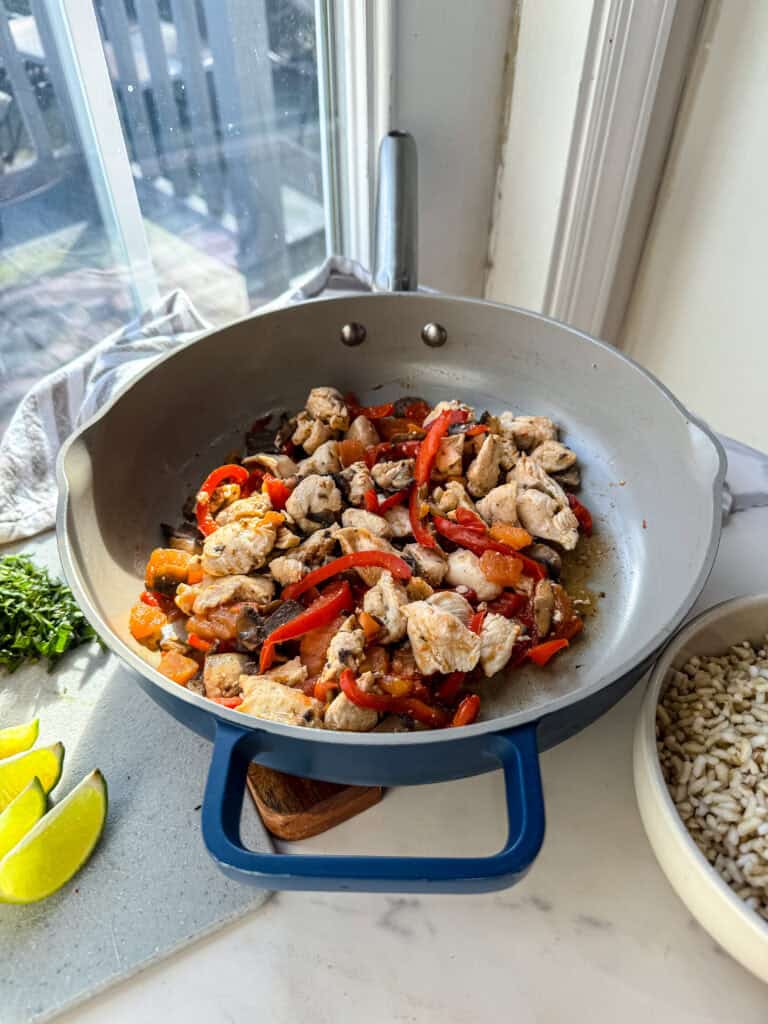
Step 5: In the same skillet, add the sliced bell pepper and onion. Sauté for 5-7 minutes until tender-crisp.
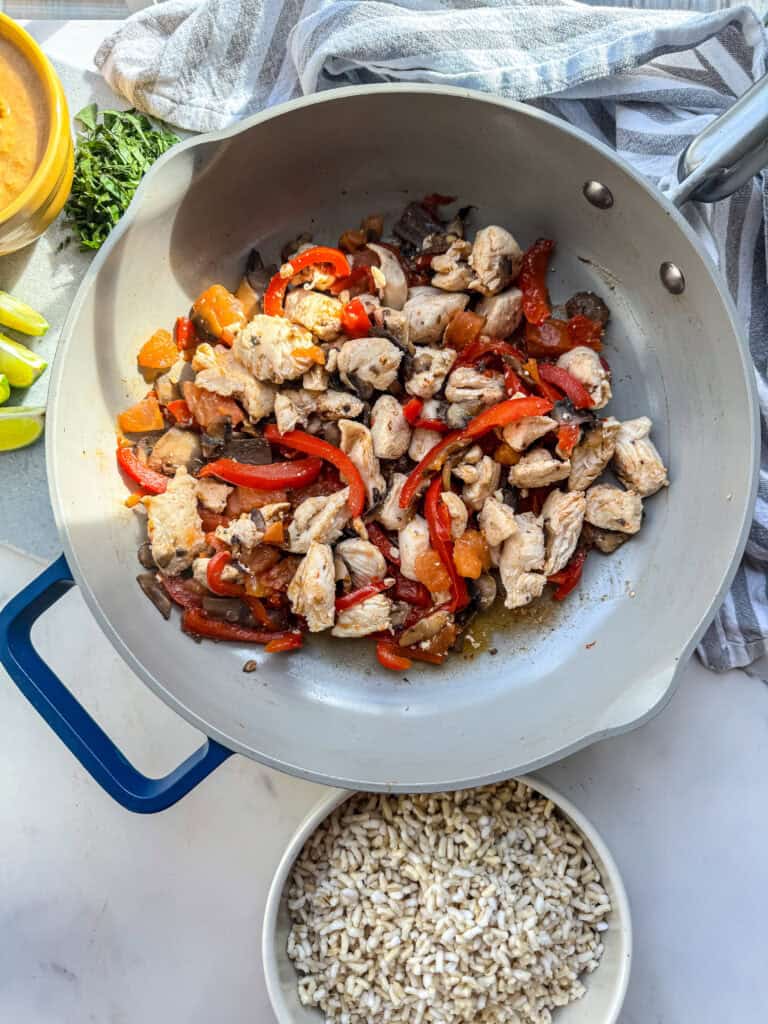
Step 6: Pour the red curry sauce into the skillet with the vegetables. Add the cooked chicken back in. Stir everything together until fully combined.
Step 7: Stir in the fresh Thai basil leaves and let them wilt slightly, about 1 minute.
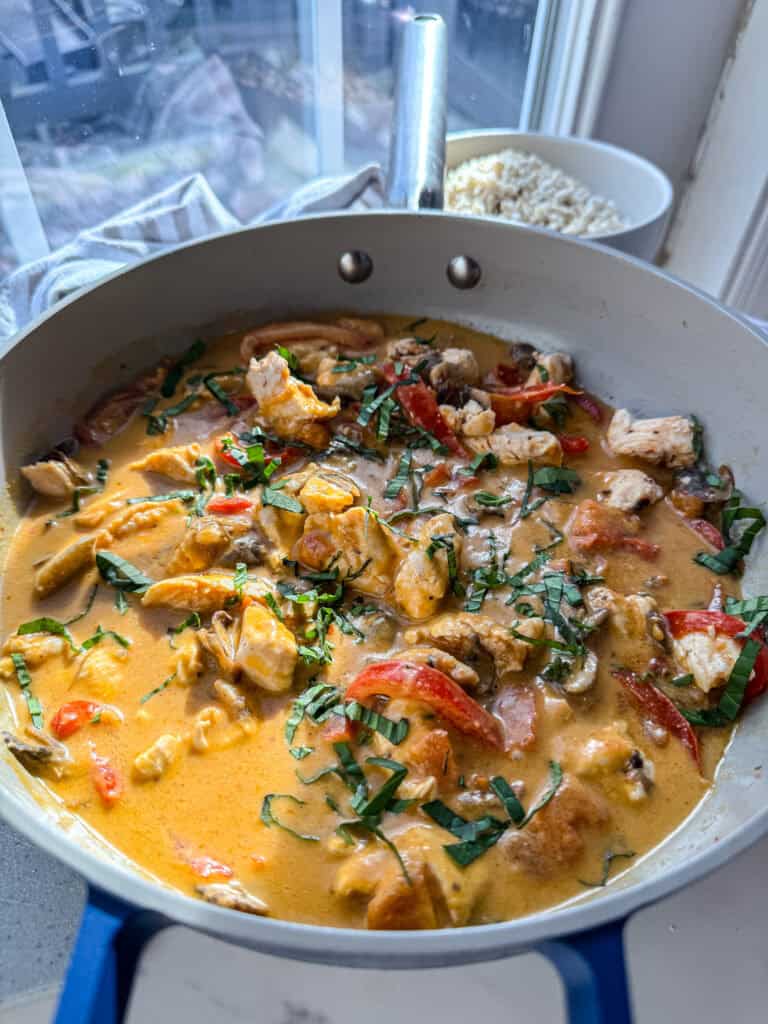
Step 8: Serve over cooked rice and enjoy immediately!
Tips for the Best Thai Red Curry
Curry too spicy? Start with 2 tablespoons of curry paste next time. A spoonful of extra coconut milk can also help cool it down in the moment without diluting the whole sauce.
Sauce too thin? Let it simmer uncovered for a few extra minutes. It will reduce and thicken as the water evaporates.
Sauce too thick? Add a splash more coconut milk and stir until it reaches the consistency you want.
Chicken dry? It cooked too long in the skillet. Pull it as soon as it hits 165°F and it will finish warming through in the sauce without drying out.
Basil turning black? Add it at the very last minute off the heat. It only needs about 30 seconds to wilt and carry its flavor into the dish.
Brand of curry paste matters. Generic grocery store brands are often much milder and less flavorful than Mae Ploy or Maesri. If your curry tastes flat, the paste is almost always the reason.
Easy Variations
- Swap chicken thighs in for chicken breasts if you want a juicier, more forgiving result. They cook the same way and hold up really well in the sauce.
- Add zucchini, snap peas, baby corn, or spinach to the vegetable sauté in Step 5 for more vegetables in the bowl.
- Use tofu instead of chicken for a vegetarian version. Press it well before cutting it into cubes and brown it the same way you would the chicken.
- Stir a tablespoon of peanut butter into the sauce along with the coconut milk for a slightly nutty, richer flavor that works really well with the red curry paste.
- Swap the red curry paste for green curry paste if you want a brighter, more herbaceous flavor. The method stays exactly the same.
What to Serve With Thai Red Curry
Jasmine rice is the classic pairing and soaks up the sauce perfectly. Brown rice, cauliflower rice, or a combination of both work great too. My coconut curry rice is a great option if you want to lean into the coconut flavor even more.
Rice noodles are another great option if you want something a little different from a standard bowl of rice.
Storage and Make Ahead Tips
Fridge: Store in an airtight container for up to 3 days. This curry actually tastes better the next day as the flavors develop overnight.
Reheat: Warm gently on the stovetop over medium low with a splash of coconut milk to loosen the sauce. The microwave works too, just stir halfway through.
Make ahead: The sauce can be made up to 3 days ahead and stored separately in the fridge. When ready to serve, cook the chicken and vegetables fresh and combine with the reheated sauce.
Freezer: Freeze in a freezer-safe container for up to 2 months without the rice. Thaw overnight in the fridge and reheat on the stovetop over medium low.
Recipe FAQs
Yes and honestly they are my preference here. Chicken thighs are juicier and more forgiving in the skillet. Cook them the same way and check the temperature before adding to the sauce.
Yes with one swap. Use gluten free soy sauce, coconut aminos, or liquid aminos instead of regular soy sauce. Also check the label on your red curry paste since some brands add ingredients that contain gluten.
Red curry paste is made with dried red chilies and is slightly spicier and earthier. Green curry paste uses fresh green chilies and is brighter and more herbaceous. Both work in this recipe but the flavor profile is noticeably different.
Yes. Start with 1 to 2 tablespoons of curry paste and add more to taste. A pinch of sugar also helps balance the heat without diluting the flavor of the sauce.
Yes. The sauce keeps in the fridge for up to 3 days. Make it ahead and store it separately, then cook the chicken and vegetables fresh when you are ready to serve.
More Easy Asian-Inspired Chicken Recipes
- Coconut Curry Rice
- Gluten Free Singapore Chicken Curry
- One Pan Gluten Free Chicken Teriyaki
- Easy Sticky Chicken Recipe
If you make this thai red curry with chicken recipe, I would love to hear what you think! Leave a star rating and a comment below. And if you share it on Instagram, tag me so I can see it!
Easy Thai Red Curry with Chicken Recipe (30 Minutes)

Ingredients
For the Sauce:
- 1 tablespoon vegetable oil
- 2 cloves garlic minced
- 1 tablespoon fresh ginger minced
- 2-3 tablespoons red curry paste
- 1 13.5-ounce can coconut milk
- 1 tablespoon soy sauce, gluten free soy sauce, coconut aminos, or liquid aminos
- 1-2 tablespoons lime juice
- Optional: pinch of sugar
For the Curry:
- 1 tablespoon vegetable oil
- 1 pound boneless skinless chicken breasts cut into bite-sized pieces
- 1 bell pepper any color, sliced
- 1 onion sliced
- 1/4 cup fresh Thai basil leaves slicedd
For Serving:
- 2 cups rice cooked
Instructions
- Heat 1 tbsp oil in a saucepan over medium heat.
- Add garlic and ginger, cook until fragrant (about 1 minute).
- Stir in red curry paste, cook for 1 minute more.
- Pour in coconut milk, bring to a simmer.
- Stir in soy sauce and lime juice (and sugar, if using).
- Simmer for a few minutes, then set the sauce aside.
- In a large skillet or wok, heat 1 tbsp oil over medium-high heat.
- Add the chicken and cook until browned and cooked through. Remove chicken from the skillet and set aside.
- Add the sliced bell pepper and onion to the same skillet.
- Sauté until the vegetables are tender-crisp, about 5-7 minutes.
- Pour the red curry sauce back into the skillet with the peppers and onions.
- Add the cooked chicken back into the sauce.
- Stir in the fresh Thai basil leaves until they wilt slightly.
- Spoon the red chicken curry over cooked rice. Enjoy immediately!
Notes
Love this recipe? You can sign up here to receive easy meal plans, exclusive new recipes and updates!
Hi, you mentioned this is a gluten free recipe however to my knowledge soy sauce isn’t typically not gluten free. Please clarify.
Yes i use gluten free soy sauce, coconut aminos or liquid aminos! I had the note on the side but I moved it more to front and center now so you don’t miss it.